Double Flowered Daylily Plants for Sale: A Guide to Fuller Garden Displays
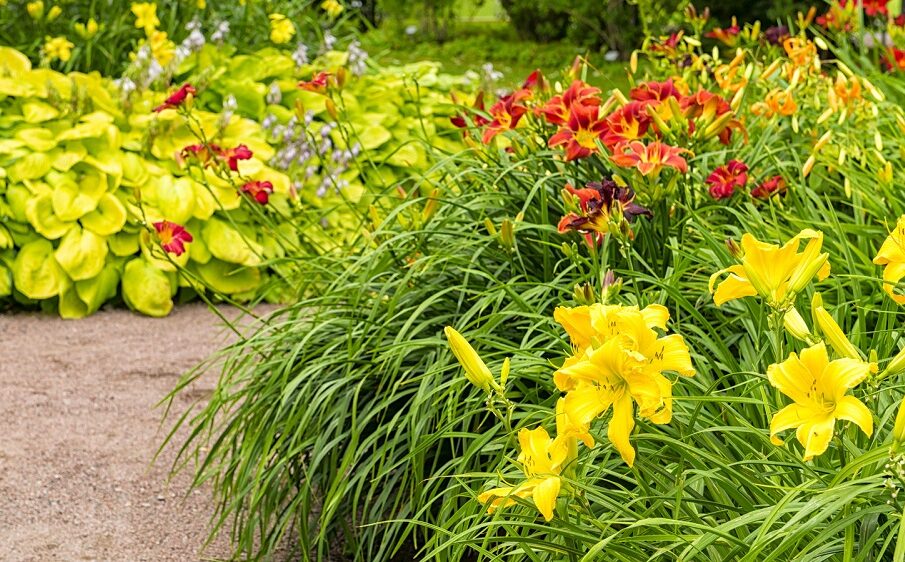
Double flowered daylilies bring density, texture, and a more sculptural presence to a summer border. Their appeal is immediate, but their success depends on space. A full bloom reads beautifully when the surrounding planting gives it air, contrast, and a clean viewing point; it can look heavy if every nearby plant is equally busy.
The best use of doubles is not to make the whole bed feel richer. It is to choose a few places where a fuller flower form can slow the eye, mark a transition, or make a foreground planting feel more deliberate. In that sense, the double flower is less like extra color and more like a change in texture.
Give Fuller Blooms Room to Be Seen
SwallowtailDaylilies, a premier grower of daylily plants, emphasizes that fuller bloom forms need simpler neighbors than gardeners often expect. Fine foliage, low edging plants, open mulch, and calm green leaves give the flower enough visual room to show its form. If a double daylily is placed inside a crowded mix of ruffled petals, tall stems, and competing colors, the detail that made it special becomes harder to read. The better approach is to decide first where the garden needs weight: near a path bend, at the front of a deep border, beside a plain evergreen, or in a bed where smaller flowers have created too much visual scatter. Once that role is clear, choosing double flowered daylily plants for sale becomes a design decision about shape and proportion, not a search for the largest-looking bloom.
Texture also changes with distance. A double flower that feels ornate up close can become a useful block of color from across the garden. That means placement should account for both views: the near view that rewards detail and the far view that needs a clean, readable form.
Because the flower is already visually generous, restraint around it often creates the most polished effect. A plain companion can be more useful than another showy plant. The goal is not to compete with the double form, but to let the garden explain why that fullness belongs in the composition.
This is especially important in smaller beds, where one strong flower can dominate quickly. A double form near the front of a border needs enough open space around it for the viewer to understand the petal structure. It does not need to be isolated, but it does need a calmer setting than a simpler bloom would require. The fuller the flower, the more carefully the surrounding texture should be edited.
Use Doubles as Texture, Not Extra Noise
A double daylily has a different visual weight from a simpler bloom. It occupies more attention, even when the plant is not larger. In a mixed border, that means it should be treated as texture. The bloom can echo rounded shrubs, soften a hard edge, or balance a section that has too many narrow leaves and small flowers.
Texture needs contrast to be understood. A full flower beside fine grass, narrow iris foliage, or a clipped evergreen reads clearly because the eye can separate one form from another. A full flower beside several other full, ruffled, or heavily colored plants may lose its identity. The bed becomes louder, but not necessarily better.
This is why doubles often work well as limited accents. One clump near a seating area can invite closer looking. A pair along a path can create a measured rhythm. Several placed through a small bed may be too much unless the surrounding foliage is very quiet and the colors are carefully controlled.
Thinking of doubles as texture also helps with color restraint. A ruffled or layered bloom already creates movement through form, so it may not need the brightest possible color to be effective. In many gardens, the most refined display comes from combining a fuller flower with quieter colors nearby. The planting still has drama, but the drama is carried by shape and depth rather than by competing saturation.
Choose a Viewing Distance Before Planting
Full bloom forms reward inspection, but they still need to work from normal garden distances. A plant seen mainly from a patio table can carry more detail than one viewed from across a lawn. A border along a driveway may need a stronger block of color and a simpler outline. The right placement begins with the real viewpoint.
Close views allow the flower’s folds, ruffles, and layered petals to matter. In those places, the companion planting should be quiet enough that the visitor can notice the bloom without searching for it. Low foliage, clean mulch, and a simple repeated ground layer can make the detail feel intentional.
From farther away, the exact petal structure matters less than the bloom’s mass and color. The double form can still help, but it works as a stronger shape rather than as intricate detail. A gardener who understands that shift can place doubles where they contribute at more than one distance.
The viewing angle matters too. A double flower placed below eye level near steps or a terrace may show its form differently than one seen across a flat bed. Morning and evening light can also reveal the layered petals more clearly than harsh midday light. A thoughtful placement gives the flower at least one natural moment when its form is easy to appreciate.
Pair Fuller Flowers With Cleaner Foliage
The most dependable companions for double daylilies are not always the most exciting ones. Clean foliage, steady green shapes, and plants with smaller or simpler flowers often do the best support work. They let the daylily carry the ornamental moment while still keeping the bed coherent after bloom.
Fine-textured grasses can be especially useful because they create movement without adding another heavy flower. Low perennials with rounded leaves can hold the front of the bed. Shrubs with plain foliage can give the flower a calm background. Each choice gives the double form enough room to breathe.
Color should be handled with the same care. A double bloom in a strong color may need neighboring plants that repeat undertones rather than matching the flower exactly. A softer double may need a darker foliage edge or a nearby evergreen to keep it from blending into the rest of the planting.
Companion height should stay disciplined as well. If nearby plants rise into the same visual zone as the daylily flowers, the bloom can lose its outline. Lower companions often work better at the front, while taller backgrounds should be far enough behind the clump to create depth rather than interference. This spacing lets the flower stand forward without making the bed feel sparse.
Avoid Crowding the Main Event
Crowding is the easiest way to weaken a double flower. The plant may still bloom, but the display loses clarity. Stems disappear into surrounding growth, petals compete with other textures, and the fullness that should feel rich begins to feel cramped. Space is not wasted around a strong flower; it is part of how the flower is seen.
The same rule applies to repetition. Repeating double forms can be effective in a large border, but the intervals need to feel intentional. If every few feet brings another equally full bloom, the rhythm becomes predictable and tiring. A better pattern lets the form appear, rest, and return.
Maintenance also becomes easier when the clump has room. Spent stems can be removed, leaves can be cleaned, and neighboring plants can be trimmed without disturbing the whole planting. A crowded placement may look lush for a short time, but it usually asks for more correction later.
Crowding can also blur the seasonal sequence. If every plant around the double daylily is blooming at the same time and at the same intensity, the bed has no hierarchy. A stronger plan lets some companions bloom earlier, some provide foliage during peak daylily bloom, and others carry interest afterward. The double form then becomes one chapter in the border rather than the entire story.
Let Fullness Support the Border’s Structure
Fuller flowers can help solve structural problems in a bed. A border that feels thin at the front may need a stronger foreground note. A long planting that lacks pauses may benefit from a few fuller clumps at measured intervals. A bed with too many small flowers may need a bolder form to give the eye something to hold.
The key is to connect the flower’s fullness to a design need. If the plant is chosen only because the bloom looks impressive, placement becomes guesswork. If it is chosen because the bed needs weight, texture, or a slower focal point, the result feels more deliberate. The flower has a job before it ever opens.
That job should remain visible after the bloom is gone. The foliage should still help fill space, mark a rhythm, or support neighboring plants. If the clump becomes irrelevant once the flowers pass, the bed may need a different companion structure around it.
In established gardens, this often means editing before adding. A fuller daylily may need a clearer foreground, a less competitive neighbor, or a repeated foliage shape more than it needs additional flowers nearby. Removing visual clutter can make the new clump feel intentional from the start. The purchase is only one part of the design decision; the surrounding space is what lets the plant succeed.
In newer beds, the same principle can guide spacing from the beginning. It is tempting to plant closely because the border looks young and unfinished, but a double form needs room to mature into its role. Temporary annuals or low seasonal fillers can cover early gaps without stealing long-term space. That approach keeps the first season attractive while still protecting the shape the daylily will need later.
The strongest structure often comes from contrast between full and plain forms. A double flower beside simple foliage feels intentional because the viewer can read the difference quickly. A double flower surrounded by other complicated shapes may still be beautiful, but the border has to work harder to explain itself. Clear contrast gives the plant authority without making the display feel heavy.
Review the Display After Peak Bloom
The best test for a double daylily placement happens after the first strong bloom period. At that point, the gardener can see whether the flower improved the bed or merely created a temporary highlight. A successful clump leaves the planting more organized, not just more colorful for a few days.
Review the bed from the route people actually use. From a path, the flower should have been easy to notice without feeling forced. From a seating area, the detail should have rewarded attention. From a distance, the clump should still have contributed shape, color, or rhythm.
Double flowered daylilies are most effective when their richness is handled with discipline. Give them space, simpler neighbors, and a reason to occupy attention. Then the fuller bloom becomes more than a decorative flourish. It becomes a useful design element that gives the summer border depth, texture, and a more memorable focal rhythm.
That discipline does not make the planting less expressive. It makes the expression easier to see. A double bloom can be lush, romantic, and memorable without overwhelming the bed. When the garden gives it contrast, room, and a clear role, the flower feels generous rather than excessive, and the display stays convincing long after the first impression.
The best final adjustment is usually modest. If the flower looked crowded, widen the planting pocket or reduce a nearby companion. If the bloom looked disconnected, repeat a supporting foliage shape or echo one undertone elsewhere in the bed. Small edits can make a fuller daylily look as though it always belonged there, which is the real mark of a successful ornamental display.
Over time, that kind of review also makes future buying easier. The gardener learns where the bed can carry richness and where it needs restraint. Doubles then become part of a deliberate vocabulary: used where depth, texture, and a slower focal point are needed, and avoided where the planting already has enough ornament.